- All
- Product Management
- News
- Introduction
- Enterprise outlets
- FAQ
- Enterprise Video
- Enterprise Atlas

The manufacturer of the lifting rail talks about steel rails.
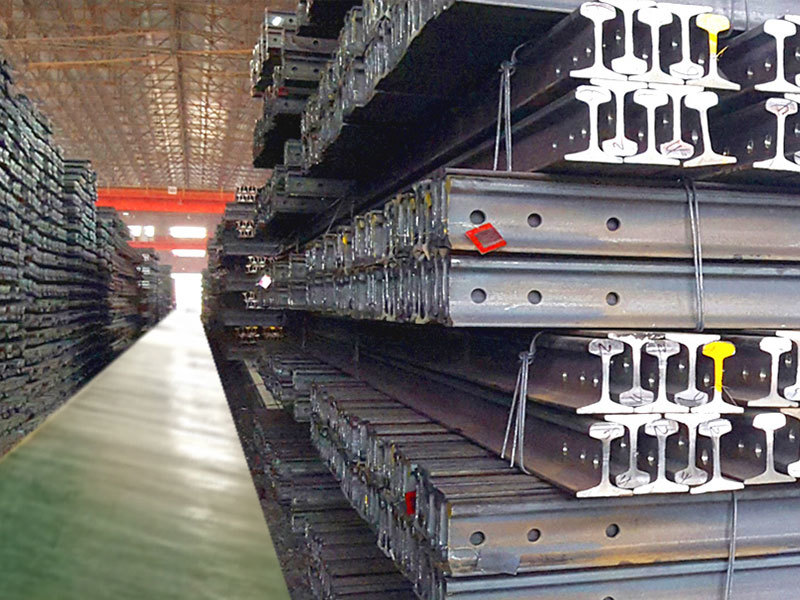
Lifting railThat is, crane rail, low height, wide head and thick waist, only requires inspection of chemical composition and tensile strength. Used for laying tracks for cranes and trolleys. Production factories include Ansteel, Panzhihua Steel, etc. Currently available.Lifting railManufacturers talk about rails.
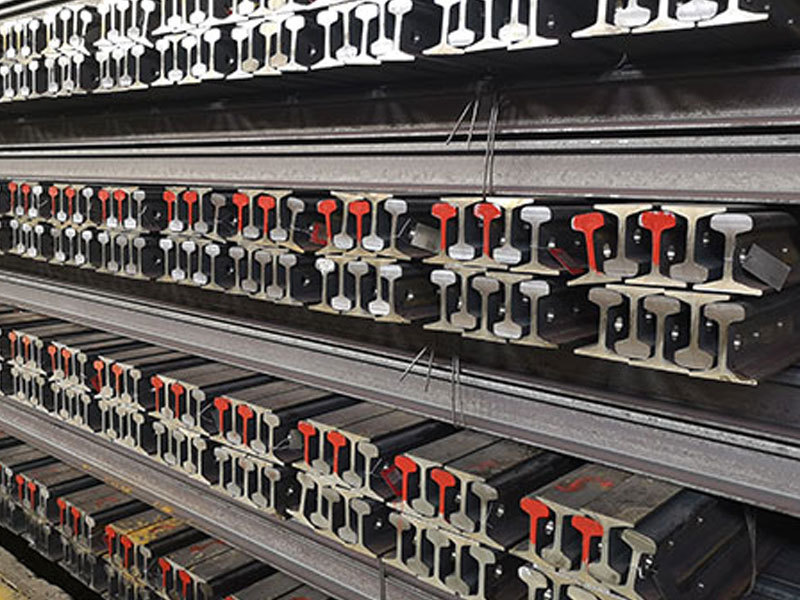
Rails are the main component of railway tracks. Their function is to guide the wheels of locomotives and vehicles forward, withstand the enormous pressure from the wheels, and transmit it to the sleepers. Rail wheels must have a continuous, smooth, and low-resistance rolling surface. In electrified railways or automatic block sections, rails can also serve as track circuits.
Lifting railManufacturers indicateIn China, rails can be divided into crane tracks (crane tracks), heavy rails, and light rails, with weights approximately per meter in kilograms:
① Crane tracks are divided into four types: QU120, Qu100, Qu80, and Qu70. The general material is manganese steel, with the largest single weight being Qu120, reaching 118 kg/m.
② Heavy rails. Classified by the type of steel used: ordinary manganese steel rails, copper-containing carbon steel rails, high-silicon copper-containing steel rails, copper rails, manganese rails, silicon rails, etc. Mainly 38, 43, and 50 kg types. In addition, a few lines use 45 kg rails, and lines with large traffic and high speed plan to use 60 kg rails. GB2585—81 specifies the technical conditions, dimensions, and codes for 38 to 50 kg/m rails in China.
Lifting railManufacturers indicateIn 2007, China issued a new standard GB 2585-2007. In addition to 38 ~ 50 kg/m, it added 60 kg/m heavy rails and 75 kg/m heavy machine rails. Countries around the world have their own standards for producing rails, and the classification methods are also different.
③ Light rails. The variety standards specify '8'. Mainly different rail types such as 9, 12, 15, 22, 30 kg/m, etc., with cross-sectional dimensions and rail types. Technical conditions are specified in the standards of '8'.
Light rails are also divided into national standards (GB) and departmental standards (YB Metallurgical Department standards). The above mentions several models of GB, while YB models include: 8, 18, 24 kg/m, etc.
(2) Manufacturing and usage.
Lifting railManufacturers indicateRails are made from carbon-silenced steel smelted in open hearth and oxygen converters. Their purpose is to withstand the operational pressure and impact loads of locomotives and vehicles.
Tag:
recommend News
Saint Ark explains what light rail is.