- All
- Product Management
- News
- Introduction
- Enterprise outlets
- FAQ
- Enterprise Video
- Enterprise Atlas

The manufacturer of lifting rails explains the types of steel rails.
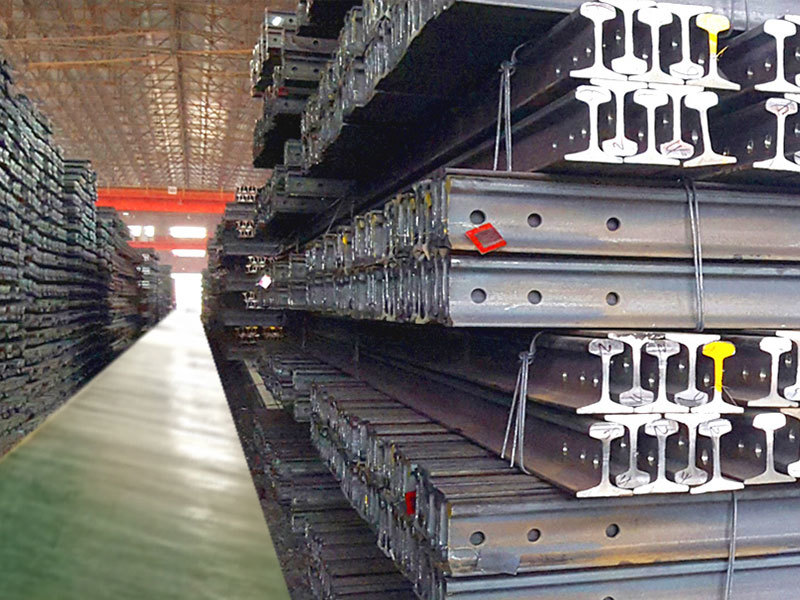
Lifting railThe manufacturer indicates that the type of rail is represented by the weight in kilograms per meter of rail. There are several types of rails used in our country's railways: 75kg/m, 60kg/m, 50kg/m, 43kg/m, and 38kg/m.
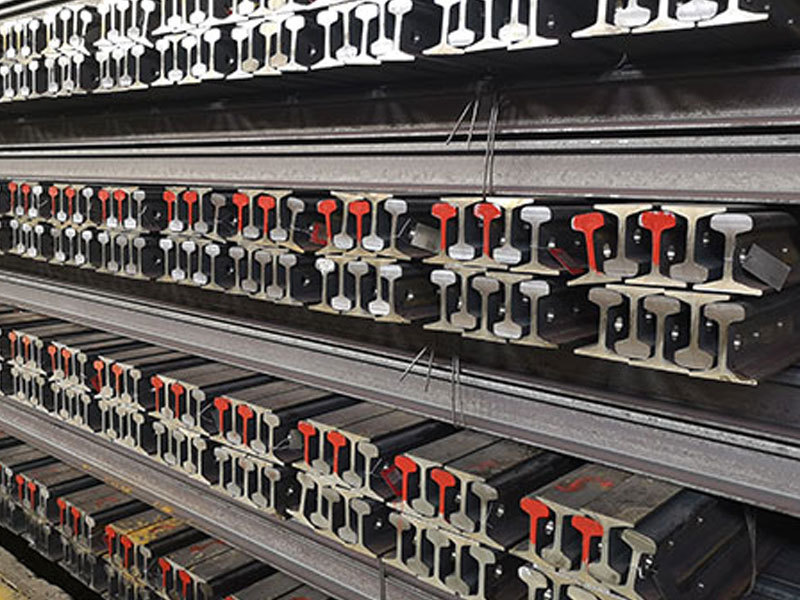
Lifting rail manufacturer indicatesThe cross-section of the rail adopts a I-shaped section with good bending performance, consisting of three parts: rail head, rail web, and rail base. To better withstand forces from all directions and ensure necessary strength conditions, the rail must have sufficient height, and the head and base must have adequate area and height, while the web and base should not be too thin.
Among the above types of rails, the 38kg/m rail has been discontinued, the 60kg/m and 50kg/m rails are laid on the main line, and the 43kg/m rail is generally laid on station lines and dedicated lines. For heavy-load railways and particularly busy sections, 75kg/m rails are laid.
In addition, to meet the needs of structures such as turnouts, large bridges, and seamless tracks, our country's railways also use special cross-sections of rails (asymmetrical I-shaped with respect to the central axis). Currently, the widely used type is the short special-shaped cross-section rail, referred to as AT rail.
Rail length
Lifting rail manufacturer indicatesThe standard lengths of rails in our country are 12.5m and 25.0m, with heavy-load and heavy-duty rails using the standard length of 25.0m, while other types of rails can use standard lengths of 12.5m or 25.0m.
The temporary technical conditions for 250km/h passenger dedicated line 60kg/m rail stipulate: the fixed length of the standard rail for 250km/h passenger dedicated line (including freight and cargo) is 100m.
There are three types of curve shortening rails, which are shorter than the 12.5m standard rail by 40, 80, and 120 millimeters, and shorter than the 25.0m standard rail by 40, 80, and 160 millimeters.
Dimensions:
Lifting rail manufacturer indicatesThe length of the rail and other geometric dimensions, tolerances, etc., are specified by the corresponding standards as "8" in light and heavy rails.
Appearance:
(1) After rolling, the rail should be straight, with no obvious bending or twisting. Local bending and twisting of light and heavy rails, their corrected deformations, and the inclination of the rail end faces must not exceed the standards.
(2) The surface of the rail should be clean and smooth, free from defects such as cracks, scars, and scratches; the end faces should not have shrinkage holes or interlayers. The allowable defects and their geometric quantities on the entire surface of light and heavy rails must not exceed the standards.
Tag:
recommend News
Saint Ark explains what light rail is.