- All
- Product Management
- News
- Introduction
- Enterprise outlets
- FAQ
- Enterprise Video
- Enterprise Atlas

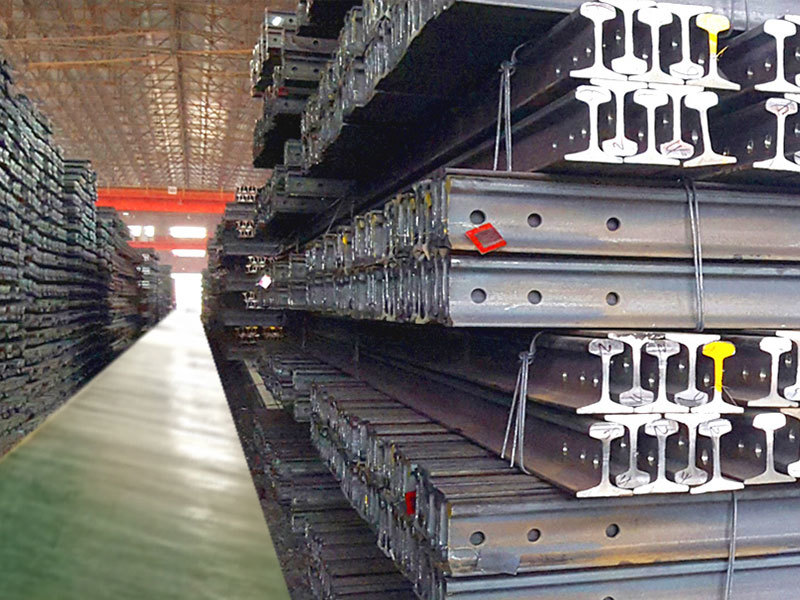
Light rail is a form of urban public transportation that typically operates on tracks laid along city streets or in dedicated corridors. It is designed to provide efficient and reliable transit service, often connecting suburban areas to city centers. Light rail systems usually feature lower capacity and speed compared to heavy rail systems, making them suitable for shorter distances and frequent stops. They can be powered by electricity and are often seen as a more environmentally friendly option for urban transport.
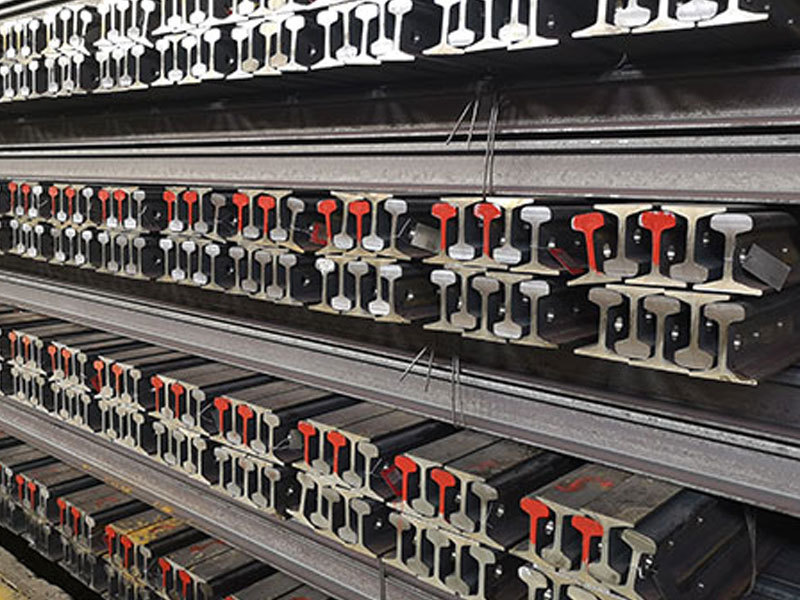
Miner's SteelManufacturers indicate that the abbreviation for light rail is light rail. It refers to a type of railway that uses lightweight materials, with a total weight much less than that of conventional railways, hence the name light rail. Light rail exists in contrast to ordinary railways, while heavy rail is the common traditional railway.
Miner's Steel Manufacturer indicatesConventional railway lines operate up and down, consuming a lot of electricity and running at high speeds. Long trains can haul 10,000 tons of cargo or carry passengers. Even passenger cars are equipped with a large number of seats, as well as sleeping berths, restrooms, kitchens, power distribution rooms, and other facilities, resulting in a heavy car body that has very high load-bearing requirements. Otherwise, it cannot withstand the weight of the vehicles. All railways are ordinary railways, including some intercity railways, suburban railways, and other subway systems.
Trains have a large passenger capacity and generally use ordinary railways. Let me tell you this process, and you can calculate it yourself. If you need a process, it indicates that you understand steel structure calculations; otherwise, you may not know where to start.
This calculation is based on a simple beam with a span of 8 meters, treating the 1.2-meter I-beam as a concentrated load to be calculated. There is also a square meter of load, considered as a uniformly distributed load. After adding these, calculate the maximum bending moment of the beam, choose the I-beam, and divide the bending moment by the section's moment of resistance to get the tensile or compressive stress. When these two stresses do not exceed the allowable stress of the material, you have chosen the correct type of I-beam, and then calculate the overall stability.
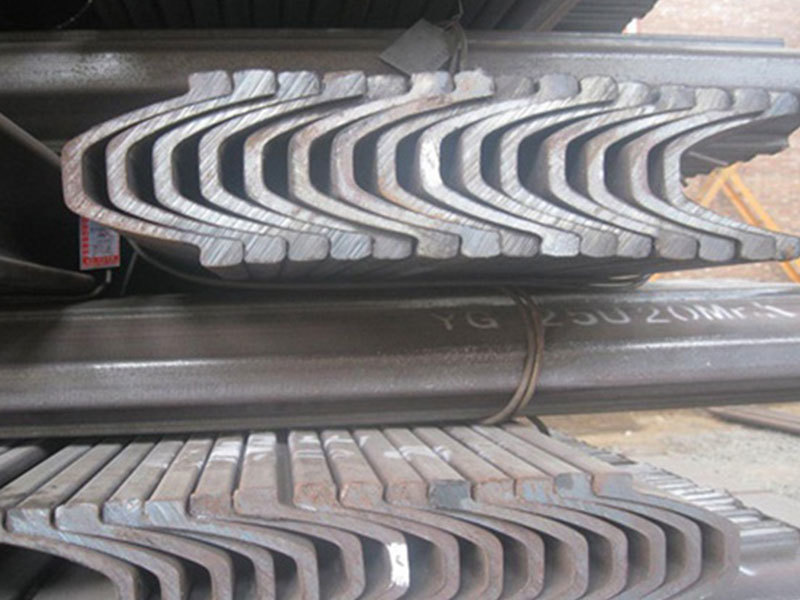
The design specifications for steel structures have simple formulas that can be substituted for calculations. If overall stability cannot be achieved, try to choose a larger I-beam or I-beam curved plate or other methods. One piece of data is missing from the data provided in the problem. What is the spacing of the I-beams? Light rail is a mode of transportation between subways and buses. It has its own special tracks like subways, while also being able to run on the ground like buses. Miner's steel is characterized by high speed and large capacity, making it particularly suitable for medium distances and large passenger flows. The tempering of manganese steel is very peculiar: if 2-3% manganese is added to the steel, the resulting low-manganese steel is as brittle as glass and will shatter upon impact. However, if more than 13% manganese is added to produce high-manganese steel, it becomes both hard and ductile. Therefore, manganese steel is used to manufacture wear-resistant mechanical parts and rails, bridges, etc.
Miner's Steel Manufacturer indicatesAnother metal, indium, is added to the upper layer of the track, which is in contact with the wheels. Its addition makes the upper part of the rail more ductile while ensuring hardness. This is very important for the train wheels. When it collides with the "tire," it generates a certain elasticity to ensure the safe operation of the train. Cast wear-resistant steel and wear-resistant steel are mainly austenitic manganese steel. Under certain conditions, properly heat-treated low-alloy steel also performs well.
Graphite steel is used for lubrication and friction working conditions. High-manganese wear-resistant steel is particularly suitable for impact abrasive wear and high-stress grinding abrasive wear conditions. Impact-resistant and wear-resistant castings include excavator bucket teeth, bucket walls, railway switches, tractor and oil tank track plates, etc. High-manganese steel is also used for: bulletproof steel plates, safety steel plates, etc.
Miner's Steel Manufacturer indicatesWear on the rear cutting edge occurs on the outer chain of small radius curves and is one of the main types of damage on curves. The friction and slipping of the track are the fundamental causes of side rail grinding when trains run on curves. When trains pass through small radius curves, there are usually two contact points between the wheels and the track, mostly resulting in side wear. The magnitude of side wear can be expressed as the product of the guiding force and the impact angle, which is the wear coefficient. Improve the conditions for trains passing through curves. In the case of worn wheel surfaces, if radial trolleys are used, the speed of side wear will decrease, enhancing the track.After that, the railway began to switch to iron tracks. After decades of improvement, the materials used were changed to steel, and the quality of the steel has greatly improved. The requirements for railway steel rails are higher than for other applications; small wounds on construction steel may not be the same.
Tag:
Previous Page
Previous Page:
recommend News
Saint Ark explains what light rail is.