- All
- Product Management
- News
- Introduction
- Enterprise outlets
- FAQ
- Enterprise Video
- Enterprise Atlas

The difference between H-beam steel and miner's steel.
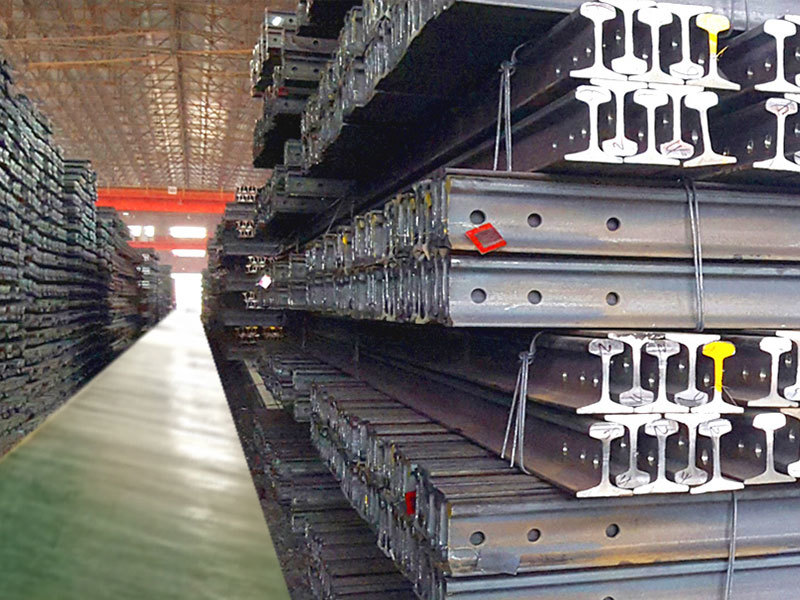
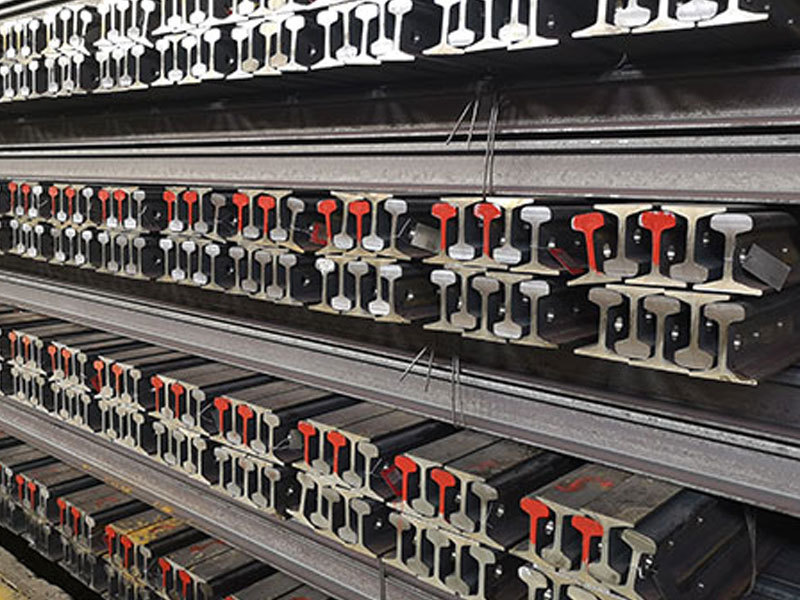
Miner's SteelWhat is the difference between miner's steel and H-beam? Many people often ask about the similarities in appearance between miner's steel and H-beam, and how to choose between them in practical applications. Below is a detailed explanation.
Many people believe that miner's steel is called miner's steel in China and H-beam abroad. In fact, this understanding is incorrect.
The shapes of H-beam and miner's steel are different.Miner's steel is an "I" shaped steel. The inner surface of the upper and lower flanges has an inclination, generally at a ratio of 1:6, making the flange thin on the outside and thick on the inside. The cross-sectional characteristics of the main plane differ greatly, making it difficult to exert its strength characteristics in application. Although thickened miner's steel has appeared in the market, the structure of miner's steel determines its torsional weakness.
H-beam is a type of profile widely used in today's steel structure buildings, with many differences compared to miner's steel. First, the flange plate; second, the inner surface of the flange plate has no inclination, and the upper and lower surfaces are parallel. The cross-sectional performance of H-beam is significantly better than that of traditional miner's steel, channel steel, and angle steel. The content on metal processing WeChat is good and worth following.
H-beam is an economically efficient profile with a more optimized cross-sectional area distribution and a more reasonable strength-to-weight ratio. The inner sides of the two outer edges of H-beam have no slope and are straight. This makes welding and splicing H-beam easier than miner's steel, and it has better mechanical properties per unit weight, which can save a lot of materials and construction time.
The I-beam cross-section is good under direct pressure and has good tensile strength, but the cross-sectional size cannot resist torsion because the flanges are too narrow. H-beam is the opposite; both have their own advantages and disadvantages.
The differences between H-beam and miner's steel:
1. Miner's steel is either a standard or lightweight type, as the cross-sectional dimensions are relatively high and narrow, resulting in a significant difference in the moment of inertia of the two main sleeves in the cross-section. Therefore, it can generally only be used directly in components that are bent in the plane or composed of lattice-type stressed components. It is not suitable for axially compressed components or components that are bent perpendicular to the web plane, making its application range very limited.
2. H-beam is an efficient and economical cutting profile (others include cold-formed thin-walled steel, profiled steel plates, etc.). Due to its reasonable cross-sectional shape, it can make steel more effective and improve cutting capacity. Unlike ordinary I-beams, the flanges of H-beam are widened, and the inner and outer surfaces are usually parallel, making it easy to connect with other components using high-strength bolts. Its size composition series is reasonable, and the models are complete, making it convenient for design selection.
Tag:
Previous Page
Previous Page:
recommend News
Saint Ark explains what light rail is.