- All
- Product Management
- News
- Introduction
- Enterprise outlets
- FAQ
- Enterprise Video
- Enterprise Atlas

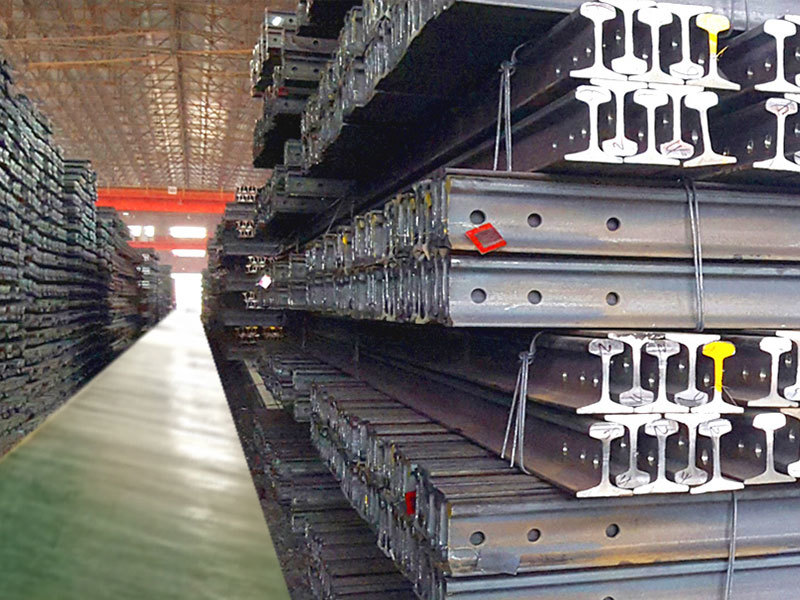
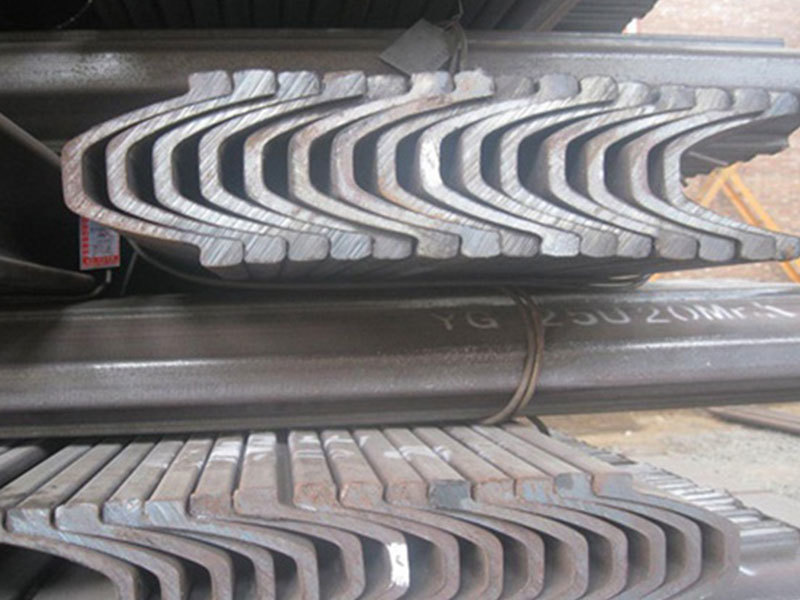
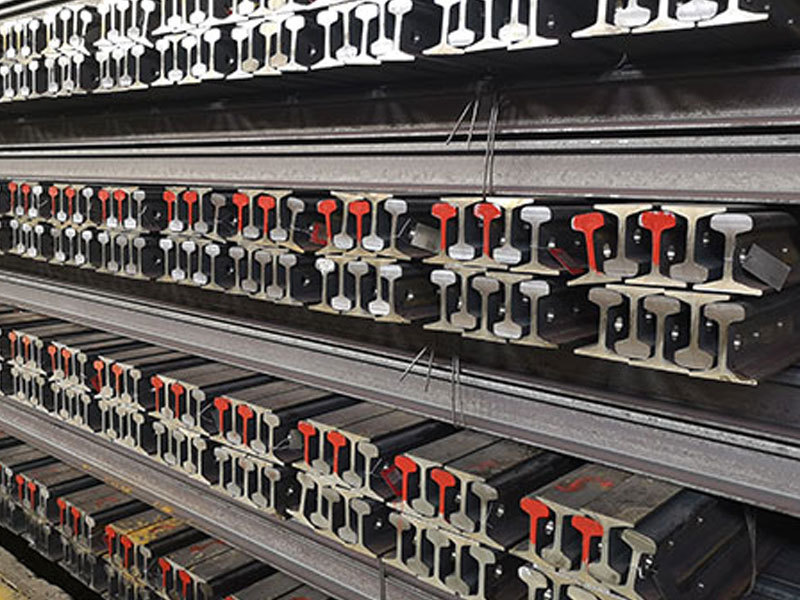
Why is miner's steel superior to other types of steel?
The national standard for hot-rolled H-beams in our country divides H-beams into three categories: narrow flange, wide flange, and steel piles, with the respective codes of hz, hk, and hu. Narrow flange H-beams are suitable for beams or bending components, while wide flange H-beams and H-beam piles are suitable for axial compression components or bending components.Miner steelCompared to H-beams, under the same weight, w, ix, and iy are not as good as H-beams.
The flanges of H-beams are all of equal thickness, and the rolled section and composite section are composed of three welded plates. Mining steel is all rolled profiles. Due to poor production technology, the inner edge of the flange has a slope of 1:10. The rolling of H-beams is different from that of ordinary mining steel, as ordinary mining steel only uses one set of horizontal rollers. Due to its wider flanges and no slope (or small slope), an additional set of vertical rollers is needed for rolling. Therefore, its rolling process and equipment are more complex than those of ordinary rolling mills. The maximum height of rolled H-beams that can be produced in our country is 800mm, exceeding that of welded composite profiles.
Hot-rolled H-beams are divided into narrow flange, wide flange, and steel piles, with the respective codes of hz and hk. Narrow flange H-beams are suitable for beams or bending components, while wide flange H-beams and H-beam piles are suitable for axial compression components or bending components. Mining steel compared to H-beams.
1. Mining steel has a small edge length and a large height, and can only bear force in one direction.
2. H-beams have deep and thick grooves, capable of bearing forces in two directions.
3. With the development of steel structure buildings, mining steel alone is not enough; thickened mining steel is prone to instability when used for load-bearing columns.
4. Mining steel can only be used for beams, while H-beams can be used for load-bearing columns in structures.
5. H-beams are an economical type of steel, with mechanical properties of the cross-section superior to mining steel. They are named after their cross-section shape, which resembles the English letter "H". The flanges of hot-rolled H-beams are wider than those of mining steel, providing greater lateral stiffness and stronger bending capacity. For the same specifications, H-beams are lighter than mining steel. The principle of production is good content worth following.
6. The flange of mining steel is thicker than the web, with the outer side being thinner; the flanges of H-beams are equal to the surface.
7. HW, HM, HN, and H are general terms for H-beams; H-beams are welded; HW, HM, and HN are hot-rolled.
8. HW refers to H-beams where the height is roughly equal to the flange width; mainly used for steel core columns in reinforced concrete frame structures, also known as rigid steel columns; primarily used for columns in steel structures.
9. HM refers to the ratio of the height to the flange width of H-beams, approximately 1.33 to 1.75; mainly used in steel structures: as steel frame columns, used as frame beams in frame structures under dynamic loads.
10. N refers to the ratio of the height to the flange width of H-beams being greater than or equal to 2; mainly used for beams; the use of mining steel is equivalent to HN-type steel.
Tag:
Previous Page
Previous Page:
recommend News
Saint Ark explains what light rail is.