- All
- Product Management
- News
- Introduction
- Enterprise outlets
- FAQ
- Enterprise Video
- Enterprise Atlas

Installation Specifications for Lifting Rails
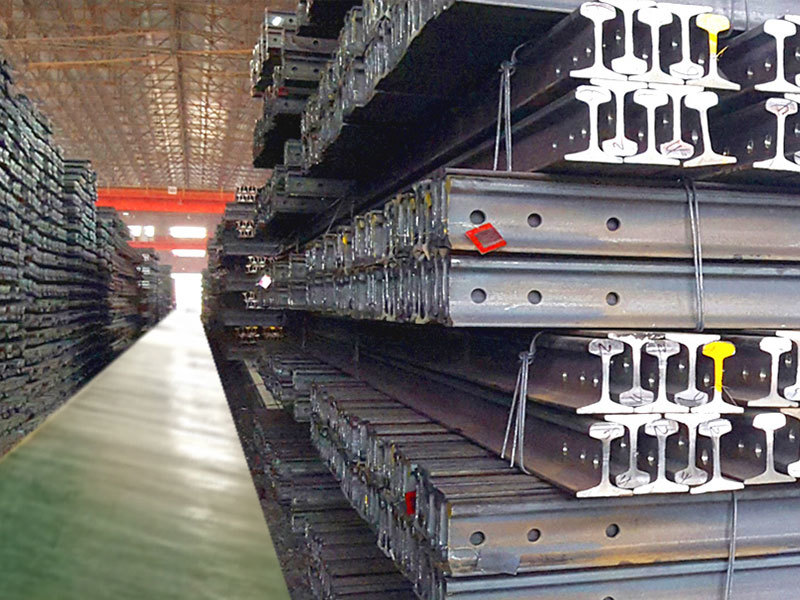
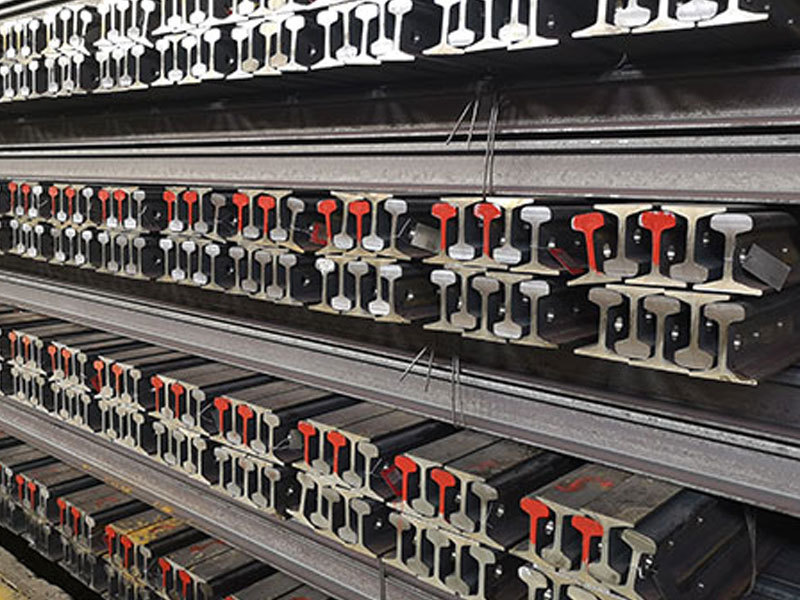
Lifting railBefore construction, conduct safety inspections on the rails, anchor bolts, and straight clamps. If there are cracks, corrosion, or non-standard specifications, they should be replaced immediately. For rails that can be repaired, the damage on the surface and sides should not exceed 3mm, and they can be reused after repairs are completed.
The lifting rail pads should closely contact the track and the load-bearing beam of the lifting equipment. No more than 20 pads should be used per level, with a length exceeding 100mm, and the total width should be 10-20mm wider than the bottom of the track. The spacing between two sets of pads should not exceed 200mm; the pads should be firmly welded to the steel load-bearing beam of the lifting equipment, and the actual contact area between the pads and the track cross-section should not be less than 60% of the nominal contact area, with any gaps not exceeding 1mm.
Rail joints can be made as direct heads or as 45° angled connections. Angled connections allow the wheels to advance orderly at the joints, with a typical gap of 1-2mm. In cold regions, during winter construction or installation, if the temperature is below the long-term surface temperature and is around 20°C, attention should be paid to the environmental temperature gap, generally 4-6mm. The joints of two rails should be separated by about 500mm.
A stop plate is installed at the end of the lifting rail. The deviation between the specific axis of the lifting rail and the geometric axis of the track should not exceed 3mm. The allowable deviation for gantry cranes and bridge cranes is ±5mm; the vertical slope of the track is 1/1500; the allowable deviation in relative elevation between two tracks is 10mm.
Electric gantry cranes are equipped with corresponding tracks, and the lifting rail is generally made of cast steel. They have a limited length and need to be connected in two sets. Their function is to facilitate the movement of the entire equipment or small vehicles, and the connected area is called the lifting rail joint.
There are many types of components at the connection points of gantry crane tracks, including anchor bolts, nuts, spring washers, straight clamps, and pins, each of which is very important. The track joints also need to be welded; if the lifting equipment track is not welded during assembly, risks may occur during use. Naturally, the tightening of bolts is also very important.
Generally speaking, we should make corresponding solutions for the lifting rail joints to ensure stable movement connections for lifting equipment or lifting vehicles when passing through the tracks, which is what we will discuss next regarding the assembly technical standards for gantry crane tracks:
1. Naturally, it is the national standard, which is to meet the requirements of relevant industry standards;
2. It is necessary to consider the effects of thermal expansion and contraction of the rails. The welding must have gaps, with specifications reduced to the range of 15-18mm, and not less than 12mm;
3. The welding sequence must be followed: first weld the top of the rail, then the waist of the rail, and finally the rail head. Therefore, the welding technique is to spray weld step by step, while repairing the surrounding area. (Note that during the spray welding, the adjacent ends of the two rails should be heated simultaneously to the same length);
4. After welding, the heat treatment process is also very important, followed by some polishing work. As long as the rail joints and the overall track remain smooth and neat, the work is considered completed.
Tag:
recommend News
Saint Ark explains what light rail is.