- All
- Product Management
- News
- Introduction
- Enterprise outlets
- FAQ
- Enterprise Video
- Enterprise Atlas

Introduction to Rail Tracks
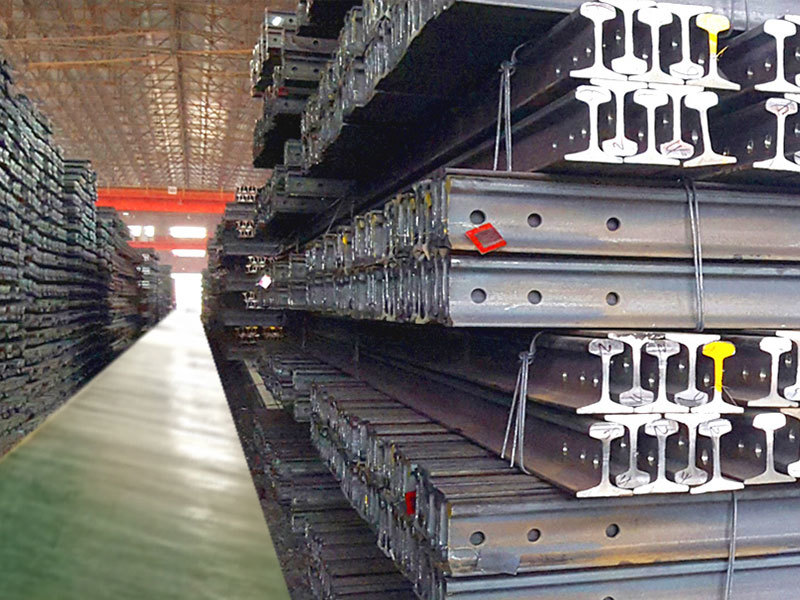
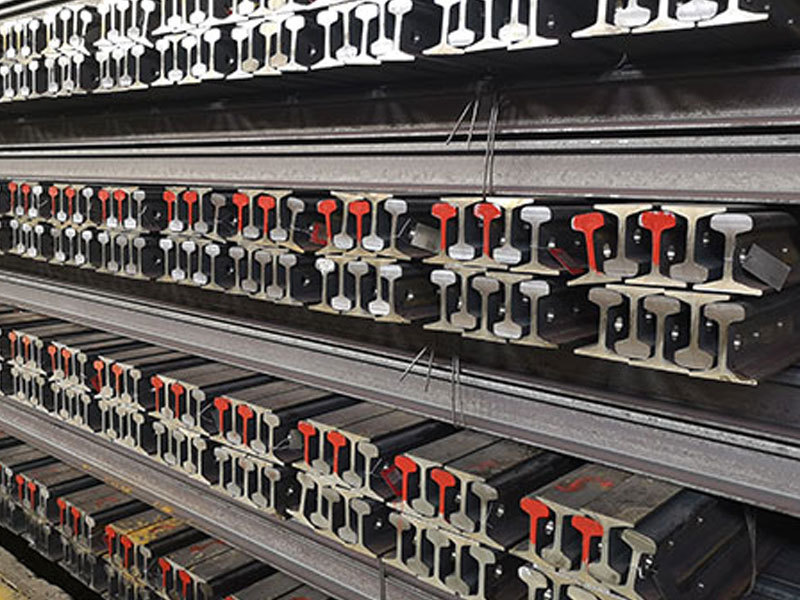
Railway trackIt is widely used in various industries, so its applications are definitely extensive. Its presence can be seen in many industries. According to the standards set by the International Heavy Haul Association in 2005, the traction force of the railway track should not be less than 8000 tons, the weight of the heavy rail should not be less than 27 tons, the cross-section length should not be less than 8000 tons, and the annual invoiced cargo volume should not be less than 40 million tons. As long as two of the above three conditions are met, it is recognized as a heavy-haul railway by the global industry. Currently, the traction quality of each heavy-haul train in our country has reached 10,000-20,000 tons, which clearly meets this standard. In fact, the so-called traction level refers to the total tonnage of the freight train pulled by the locomotive, also known as traction tonnage and train self-weight. The chemical composition of heavy rail is stable and uniform, with small deviations and high dimensional accuracy. Automatic detection of the straightness of the rails; heavy rail markings are clear, and the guide rails can be stamped, with clear and reliable characters.
The splicing of the railway track adopts flat butt joints. When the track machinery runs to the stopping position of the track, it may produce vibrations or tripping, causing damage to the track. To achieve the above objectives, this utility model provides various solutions. For example, according to one aspect of the embodiment of the present invention, the railway track in the industrial belt conveyor includes multiple segment grooves that are interconnected, with one end of each segment groove having a protruding part and the other end having a recessed part. Specifically, the protruding part at one end of the segment groove is triangular or semicircular, and the recessed part at the other end is also triangular or semicircular. Specifically, the triangular or semicircular protruding part of the heavy rail protrudes into the triangular or semicircular recessed part after butt joint. In addition, each segment groove has two protrusions, and each groove has two recesses. The protruding part at one end of the segment is a prism block with a rectangular cross-section, and the recessed part at the other end is a neck with an inverted rectangular cross-section. Therefore, after the butt joint of every adjacent segment groove, one side of the prism block's inclined surface is opposite to one side of the throat's inclined surface, and there is a gap between the inclined surfaces of the prism block and the throat.
Tag:
Previous Page
Previous Page:
Next page:
recommend News
Saint Ark explains what light rail is.